Programmes, equipment and coverage
Around 3,000 units of equipment designed, calculated and put into service since 2006, for oil and gas, aerospace, marine, chemical process, power generation and research clients. Client names are withheld; the engineering is described as delivered.
Downhole electromagnetic pump
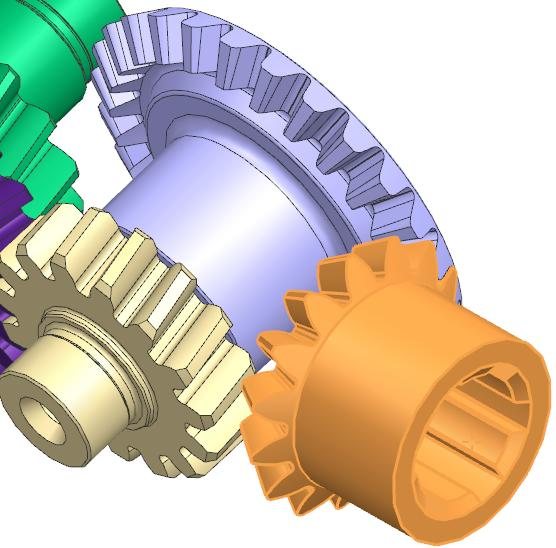
The first plunger electromagnetic pump model developed by the practice, taken apart in six numerical stages so the life-limiting component could be found before a prototype was cut.
- Kinematic analysis of the hydraulic box and plunger pair, which exposed parasitic movements that shorten pump life
- Rotor dynamics: natural speeds and bearing reaction forces from Campbell diagrams
- Strength of the plunger pair and gear train under the full torque history
- Fatigue: the plunger pair proved to be the limiting component, and its service life was calculated across the full life cycle
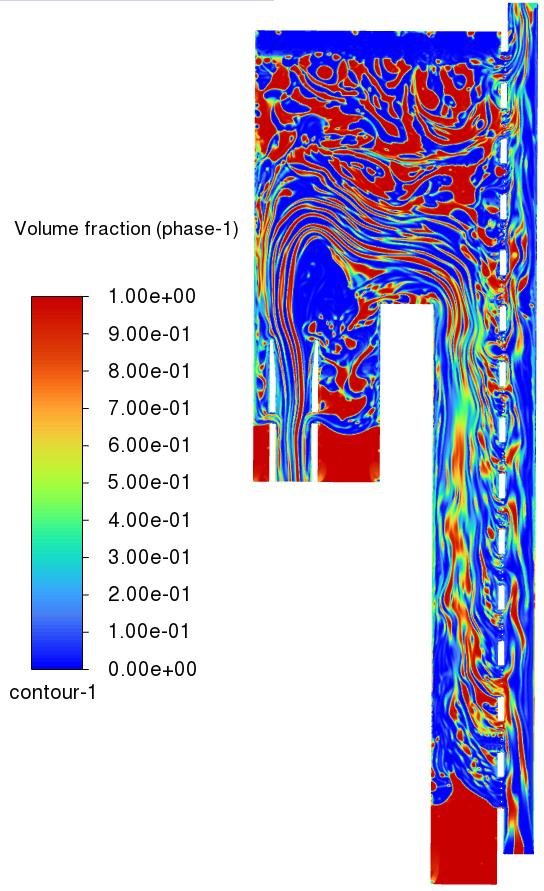
- Gas separator chamber hydraulics, then separation efficiency for oil and gas from water
- Combined hydraulics and strength: flow fields applied as loads to the strength model
Gas turbine engine, four workstreams
Thermal and gas-dynamic analysis of one engine, split into four parallel workstreams. The bypass-duct model was verified against the customer's own product tests.
- Outer (bypass) duct: a non-destructive testing methodology developed for the customer and verified against product tests, with a discrepancy below 1%
- Intermediate housing: flow-path geometry optimised, cutting total pressure loss by 0.5%
- Oil system: hydraulic calculation of every line, unit and component
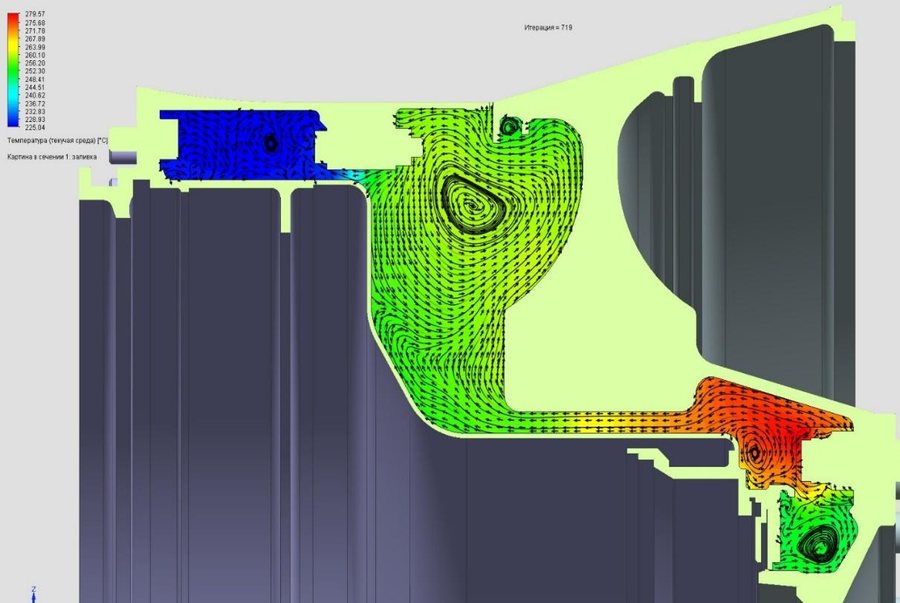
- Air system: thermal-gasdynamic calculation of the engine cavity to quantify parasitic heating of the working medium
Ice-class vessels and LNG ship loading
Pumps, shut-off and control valves and power-plant elements for ice-class vessels — the practice’s first programme under class society rules — alongside hydraulic-shock analysis of an LNG ship-loading line.
- Propulsion-plant pumps and power-plant elements for the vessel
- Strength against storms of varying magnitude, with force analysis of mechanisms and drives
- Static and dynamic strength, and service life assessment
- Machine-room noise model developed with a turbine manufacturer, with recommendations for insulation and operating modes
- LNG loading line: system characteristics and pressure-wave propagation under hydraulic shock
- All vessel equipment fully tested and put into operation
Remote-handled chemical process plant
Process equipment for a hazardous-materials processing facility where personnel cannot enter the equipment rooms and every service operation is carried out by manipulator.
- Alkaline scrubber in pure titanium, capturing acetic acid traces and fluorine and chlorine ions from distillation column steam
- Evaporator for hazardous process solutions and their condensates
- Column regenerating nitric acid from process solutions
- Filters and traps with a purpose-designed sealing system opened by remote manipulators
- Coolers and receivers for static, long-term static, cyclic, seismic and thermal strength
- Robotic cartridge-changing system: a gripper moving 350 kg at no more than 140 kg of its own mass
Complete documentation set for heat exchange equipment
A full design documentation package for heat exchange equipment at an operating power station — the deliverable a manufacturer builds from and an inspector signs off.
- Manufacturing specifications
- Repair specifications
- Inspection tables: incoming inspection, operational quality control, external inspection, spare parts and tools
- Test procedure
- Strength calculation
- Hydraulic calculation
Liquid-metal pumps and circuit equipment
Electromagnetic pumps, air coolers and vapour traps for the liquid-sodium circuits of a research facility. None of it had a standard equivalent, and the working medium reacts violently with air and water.
- Hydraulic characteristics of liquid sodium in the pump and the system
- Static, seismic and vibration strength of the pumps
- Heat exchange inside the pump and with the environment
- Pump life before failure
- Air cooler conditioning sodium ahead of the impurity monitor, and a trap clearing sodium vapour from argon blow-off gas
- Outcome: specified pump performance achieved and the installation cleared for service
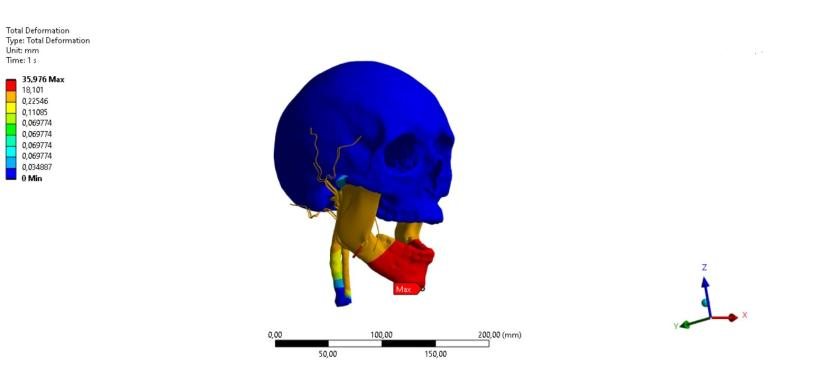
Jaw and nerve interaction model
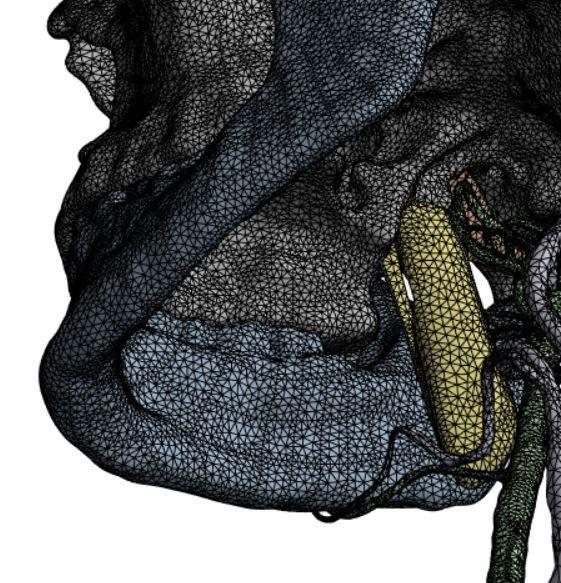
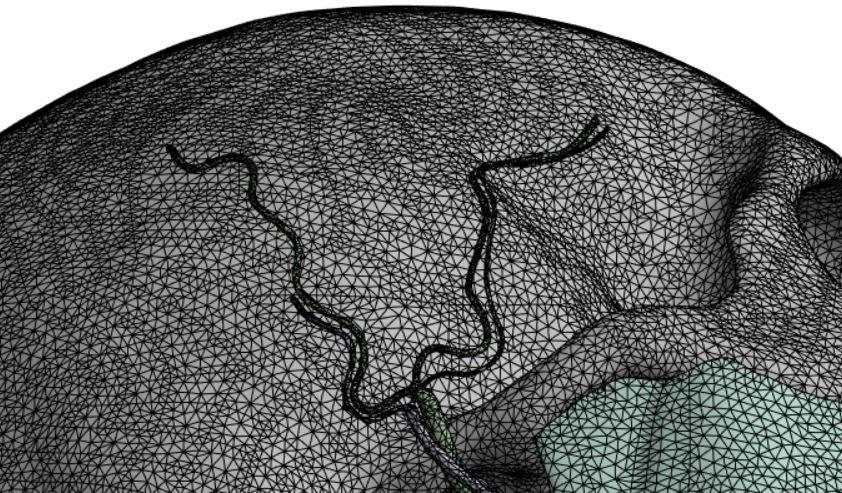
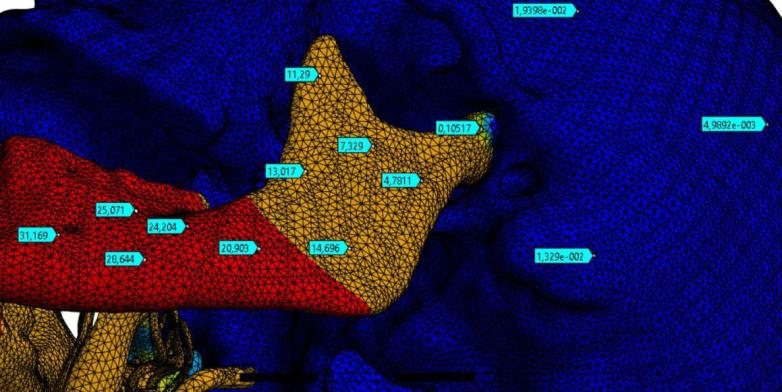
A high-quality finite element model built to study the relationship between displacement of the inferior alveolar nerve and movement of the jaw — the same modelling discipline applied to anatomy instead of machinery.
- Mesh optimised for the solver, with convergence achieved for the mesh and the established contacts
- Material properties assigned for bone, muscle and vascular tissue
- Articulated joints and elastic constraints represented explicitly
- Model fixed at the base of the skull, loaded by prescribed jaw displacement following anatomical movement
- Result maps in millimetres, with scales and probes reporting values at specific points in the global coordinate system
Frames, racks and cooling equipment
Work outside the pressure envelope: the structures that carry the equipment, and the plant that keeps it cool.
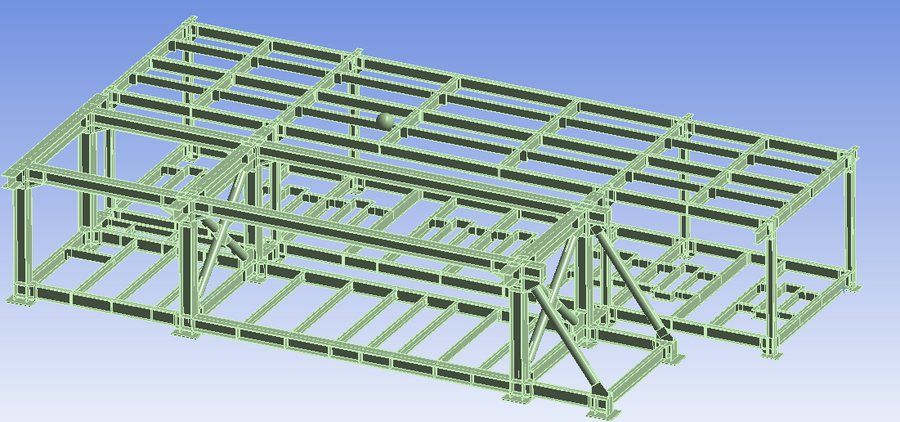
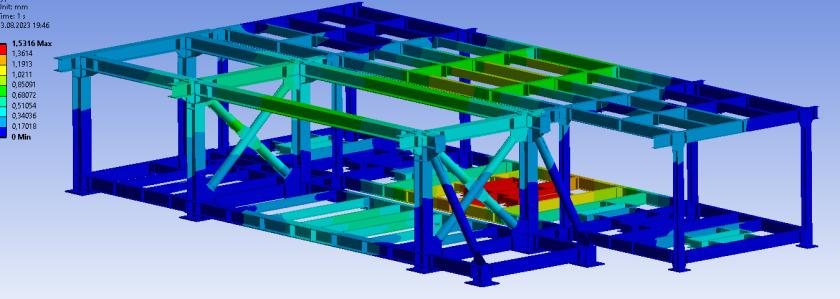
Support frame, desalination module
Strength analysis of the support frame for a seawater desalination module supplying domestic, drinking and process water to a four-unit coastal power station. Housing parts and components checked for static and vibration strength and seismic resistance. Strength conditions satisfied.
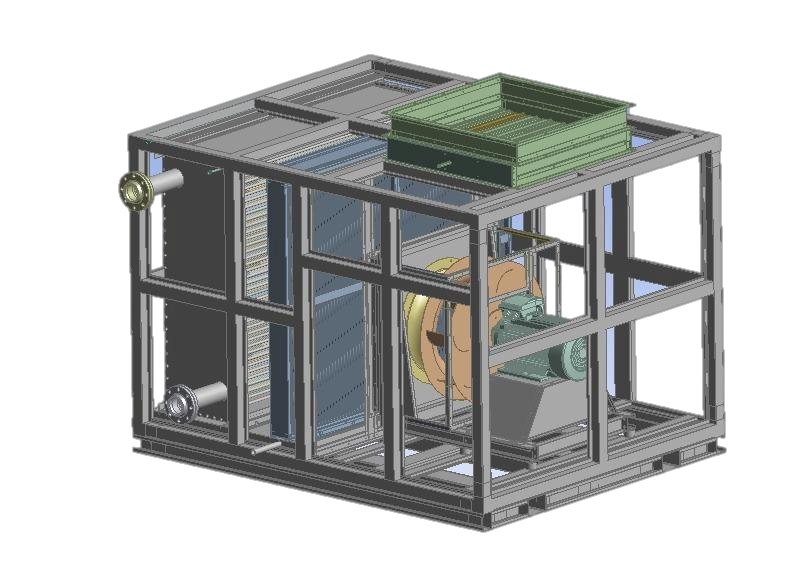
Electric heater, air handling unit
Housing and frame verified for static strength, seismic impact, blast pressure wave and aircraft impact on the building. Strength conditions satisfied in every case.
Recirculation cooling unit
Strength analysis of a recirculation cooling unit for the ventilation and air-conditioning system of a safety-system building. Static and vibration strength plus seismic resistance. Strength conditions satisfied.
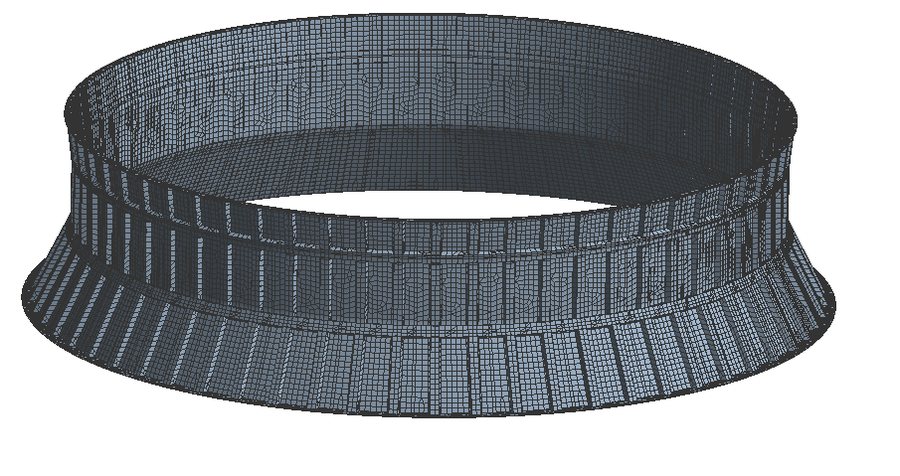
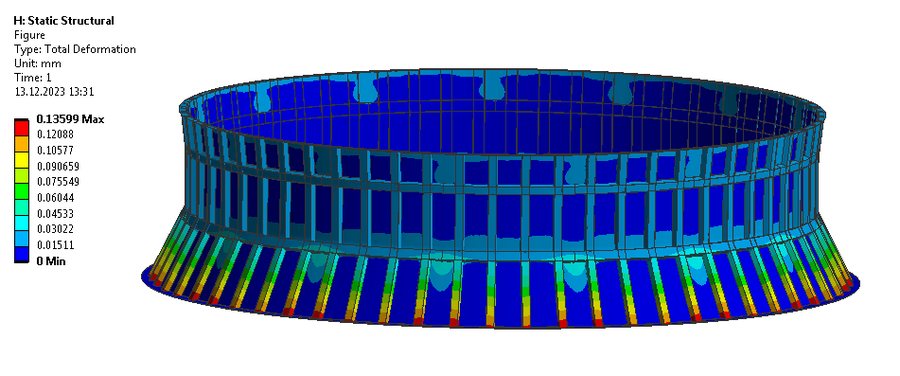
Fan cooling tower
Strength analysis under the main loads including gravity. The mesh model of the housing accounts for the anisotropy of the fibreglass material. Static strength and stability confirmed.
What we design and calculate
Twelve equipment families, from a single control valve to a drilling tool, a cooling tower or a complete skid.
What the models look like
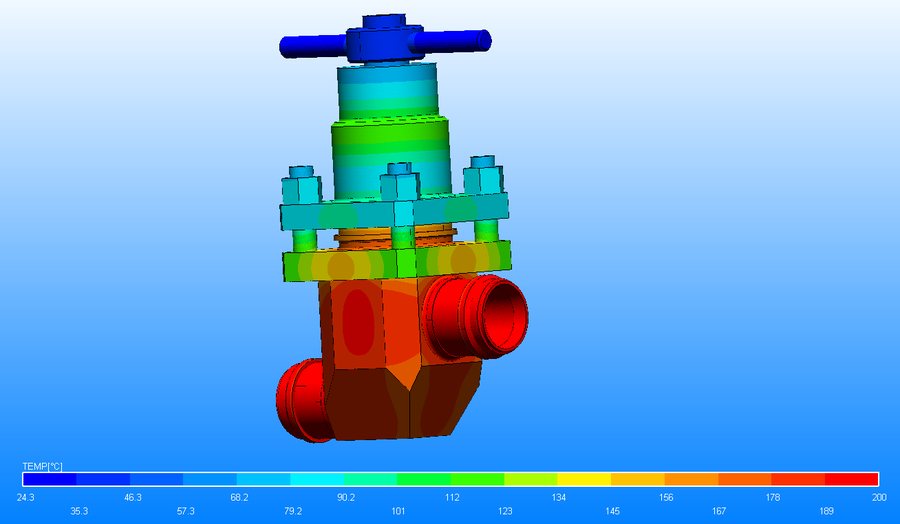
Design models, meshes and result maps from delivered work, across most of the fields the practice covers. Client names and proprietary geometry are withheld; what is shown is the modelling, not the drawing package.
Downhole and surface equipment, from gear trains to multiphase separation.
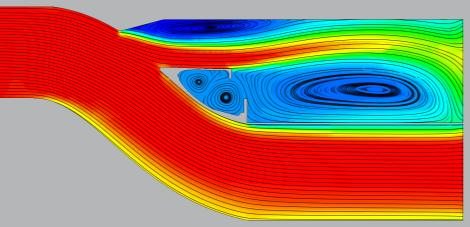
Flow paths, cavities and engine systems, modelled thermally and gas-dynamically.
Propulsion-plant pumps and assemblies for ice-class vessels.
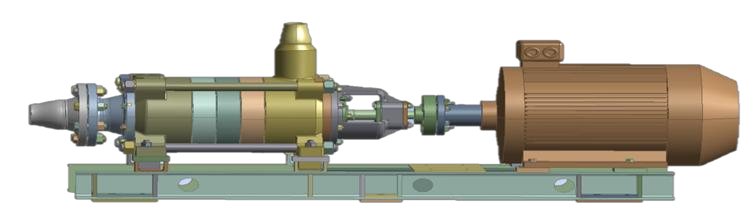
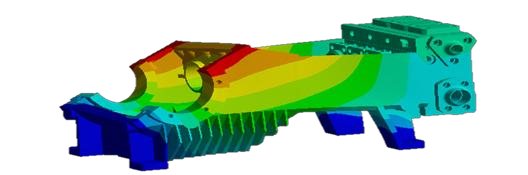
Columns, filters and process vessels, proved for pressure, thermal cycling and fatigue.
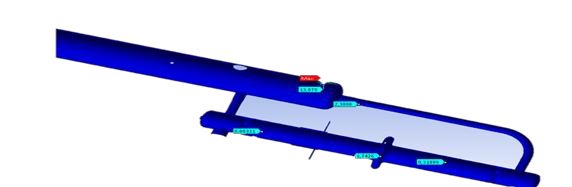

Frames, racks and cooling equipment outside the pressure envelope, checked for static, vibration and seismic loading.
Liquid-metal pumps and coolers, heat exchange equipment and desalination plant for power stations.
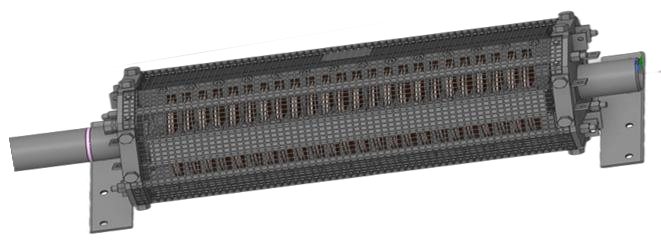
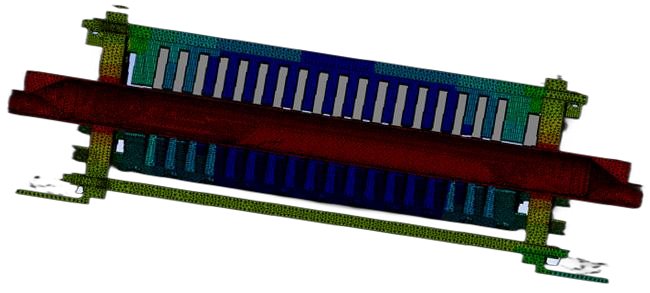
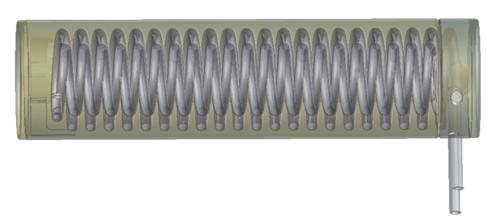
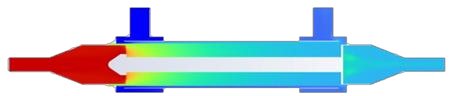
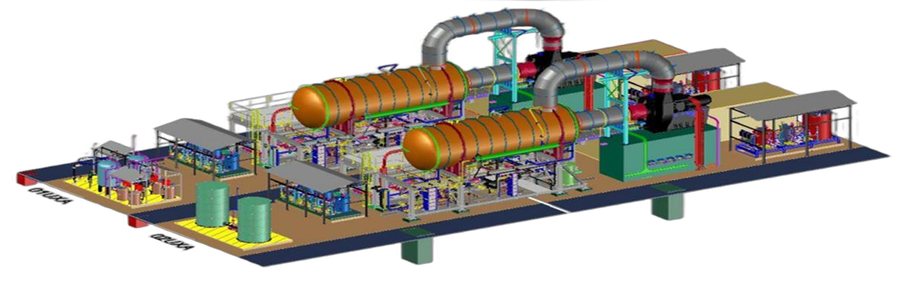
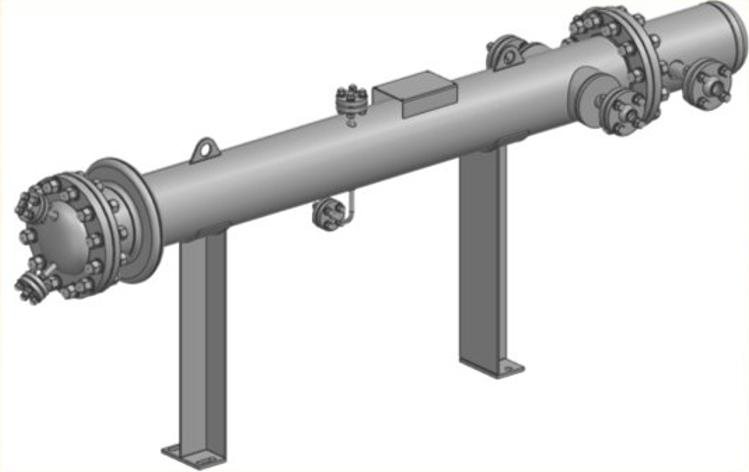
Benchmarks run to confirm that two solvers, or a solver and a test, agree before the method is used on client work.
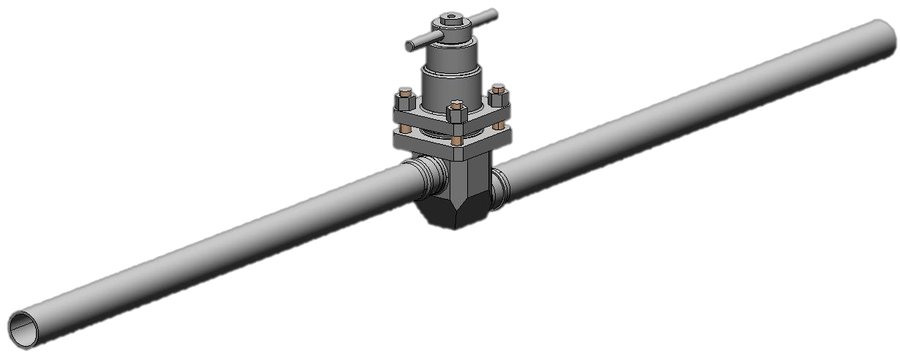
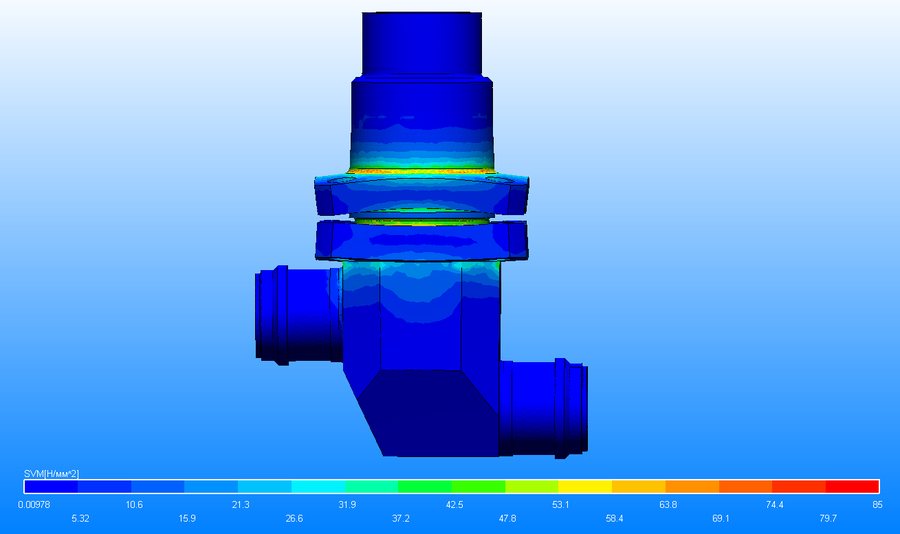
The same finite element discipline applied to anatomy, with bone, muscle and vascular properties in one converged model.
Where the equipment goes
Equipment carrying our calculations or documentation has been supplied to projects in nine countries across Europe, the Caucasus, the Middle East, Africa and Asia.
Which analyses apply to what
A full assessment usually runs most of the row, because the governing case is rarely the one expected at the start.
| Equipment family | Static & seismic | Fatigue & life | CFD & flow | Thermal | Electromagnetic | Documentation |
|---|---|---|---|---|---|---|
| Valves and fittings | ● | ● | ● | ● | – | ● |
| Pumps and rotating machinery | ● | ● | ● | ● | ● | ● |
| Drilling tools and downhole equipment | ● | ● | ● | – | ● | – |
| Heat exchangers and coolers | ● | ● | ● | ● | – | ● |
| Vessels, columns, scrubbers | ● | ● | ● | ● | – | ● |
| Filters, traps and separators | ● | ● | ● | ● | ● | ● |
| Handling and robotic equipment | ● | ● | – | – | – | ● |
| Frames, racks and cooling towers | ● | ● | – | ● | – | ● |
| Complete skid-mounted systems | ● | – | ● | ● | – | ● |
Want the detail behind one of these?
We can walk through the modelling approach, the standards applied and the verification evidence under NDA.